
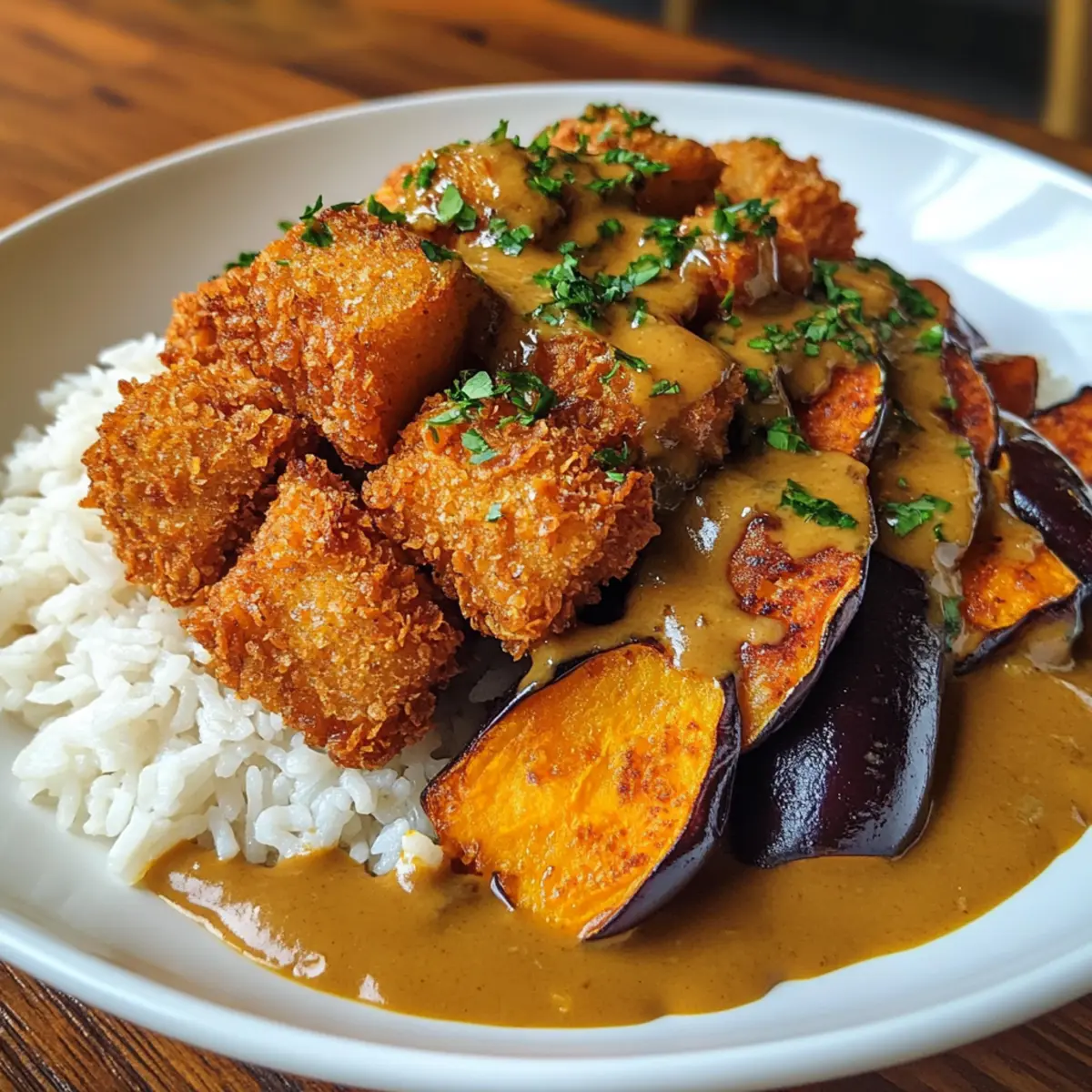
As the tempting aroma of spices dances through the kitchen, I can’t help but get excited about this Vegan Katsu Curry. It’s not just any dish; it’s a delightful twist on a Japanese favorite that brings together crispy breaded sweet potatoes and aubergine, all enveloped in a velvety coconut curry sauce. What I love most about this recipe is how quick it is to whip up, making it a perfect choice for busy weeknights, yet fancy enough to impress at dinner. Plus, it caters to various dietary preferences, so everyone can enjoy this fabulous plant-based meal. Curious about how to make this comforting dish while keeping your kitchen clean? Let’s dive in!

Why is Vegan Katsu Curry a Must-Try?
Crispy Delight: The breaded sweet potatoes and eggplant offer a satisfying crunch, making each bite a delightful experience.
Creamy Comfort: The luxurious coconut curry sauce envelops the veggies, adding rich and creamy goodness that’s simply irresistible.
Quick Preparation: Perfect for busy weeknights, this recipe comes together in no time, so you can enjoy a homemade meal without the fuss.
Customizable Options: With variations for spice levels and ingredient swaps, you can easily tailor the dish to suit any taste preference.
Crowd-Pleaser: Ideal for family dinners or guests, this Vegan Katsu Curry impresses with its vibrant flavors and stunning presentation, making it a hit for everyone. If you’re looking for more plant-based inspiration, check out this delicious Chana Masala Vegan or treat yourself to a rich Lamb Vindaloo Curry!
Vegan Katsu Curry Ingredients
For the Sauce
- Onion – Aromatic base for flavor depth; substitute with shallots for a milder taste.
- Garlic Cloves – Enhances flavor profile; can use garlic powder in a pinch.
- Carrot – Adds sweetness and texture; can swap for parsnip for a different flavor.
- Ginger – Imparts warmth and spice; use ground ginger if fresh is unavailable.
- Curry Powder – Provides the primary spice mix; choose mild or spicy based on preference.
- Turmeric Powder – Adds color and health benefits; optional but recommended.
- All-Purpose Flour – Used for thickening the sauce; gluten-free flour can be used for gluten-free diets.
- Vegetable Stock – Acts as the liquid base for the sauce; utilize homemade or store-bought stock.
- Coconut Milk – Creates a creamy texture essential for the sauce; alternatives include cashew cream or soy cream.
- Soy Sauce – Adds depth of flavor; tamari can be swapped for a gluten-free option.
- Maple Syrup – Provides a touch of sweetness; agave or brown sugar can substitute.
For the Vegetables
- Eggplant (Aubergine) – Crispy vegetable component; replace with zucchini if desired.
- Sweet Potato – Gives sweetness and culinary contrast; other root vegetables could work as substitutes.
For the Batter
- Plant-Based Milk – Essential for the batter; unsweetened almond or soy milk are good alternatives.
- Breadcrumbs and Cornflakes – Coating for crispy texture; use gluten-free varieties if necessary.
Step‑by‑Step Instructions for Vegan Katsu Curry
Step 1: Prepare the Sauce
In a medium saucepan, heat a tablespoon of oil over medium heat. Add chopped onion, diced carrot, minced garlic, and grated ginger, sautéing for 5-6 minutes until the onion softens and turns translucent. Then, sprinkle in the curry and turmeric powder, followed by the flour, stirring to combine well. Gradually pour in the vegetable stock, allowing it to simmer on low for 10-15 minutes until thickened. Blend in the coconut milk, soy sauce, and maple syrup for a smooth texture.
Step 2: Prepare the Vegetables
While the sauce simmers, prepare your vegetables by slicing the sweet potato and eggplant into even rounds about ½ inch thick. This ensures they cook uniformly and maintain a delightful bite when crisped. Arrange the sliced veggies on a plate to keep them organized as you continue with the next steps of the Vegan Katsu Curry.
Step 3: Make the Batter
In a mixing bowl, whisk together all-purpose flour, a pinch of salt, and your choice of spices (like paprika) for added flavor. Slowly stir in the plant-based milk, mixing until the batter is smooth and lump-free. The consistency should be thick enough to coat the vegetables without dripping too much, perfect for creating that crispy coating in your Vegan Katsu Curry.
Step 4: Coat the Vegetables
Take each sliced vegetable and dip it into the batter, ensuring it’s fully coated. Then, transfer the battered slice into a plate with breadcrumbs mixed with crushed cornflakes, pressing down lightly to ensure an even coating. This mixture will add an extra crunch to your Vegan Katsu Curry, making sure each piece is deliciously crispy.
Step 5: Fry the Vegetables
In a deep frying pan or skillet, heat oil over medium-high heat until shimmering. Carefully place the coated sweet potato and eggplant slices into the hot oil, frying them in batches to avoid overcrowding. Cook for about 3-4 minutes on each side or until they turn golden brown and crispy. Once done, transfer them to a plate lined with paper towels to drain any excess oil.
Step 6: Serve
Prepare your serving plates by adding a generous scoop of short-grain rice. Artfully arrange the crispy vegetables on top and generously drizzle with the coconut curry sauce you prepared earlier. For a fresh finish, garnish with sliced spring onions and sesame seeds to elevate your Vegan Katsu Curry, transforming it into a truly delightful meal for family and friends.

Vegan Katsu Curry: Delicious Customizations
Feel free to personalize this flavorful recipe with your unique twist, adding a dash of creativity to your kitchen!
- Gluten-Free Flour: Substitute all-purpose flour with gluten-free flour to cater to gluten sensitivities while maintaining a creamy sauce.
- Butternut Squash: Swap sweet potato for butternut squash for a sweeter and earthier flavor profile. Its creamy texture elevates the dish!
- Cayenne Pepper: For a spicy kick, add a pinch of cayenne pepper to your batter or curry. Just a little can greatly enhance the flavor.
- Air fryer Option: Bake or air-fry the battered vegetables for a healthier twist, cutting down on oil without sacrificing that irresistible crispiness.
- Extra Veggies: Toss in some broccoli, bell peppers, or snap peas for vibrant colors and added textures—they’ll soak up that delicious curry sauce beautifully.
- Homemade Tofu: Add crispy tofu for extra protein! Simply pan-fry or bake it before tossing it into the curry for a fulfilling meal.
- Creamy Cashew Sauce: For a nutty accent, blend soaked cashews with coconut milk and spices, and drizzle it over your dish for richness.
- Lime Zest: Brighten up the flavors by garnishing with fresh lime zest or a squeeze of lime juice; it enhances the overall taste and adds freshness!
For more comforting vegan dishes, be sure to try out this scrumptious Chana Masala Vegan or treat yourself to a zesty Lamb Vindaloo Curry. Enjoy customizing your cooking adventures!
Make Ahead Options
These Vegan Katsu Curry components are perfect for meal prep, saving you time on busy weeknights! You can prepare the curry sauce up to 3 days in advance, storing it in an airtight container in the refrigerator. Additionally, slice the sweet potato and eggplant and coat them in batter before refrigerating for up to 24 hours. To maintain the vegetables’ texture and avoid sogginess, keep the breaded veggies separate from the sauce until you are ready to fry them. When you’re ready to serve, simply heat the curry sauce, fry the vegetables until golden, and assemble your dish for a delightful meal that’s just as delicious as if you made it fresh!
How to Store and Freeze Vegan Katsu Curry
Fridge: Store leftover Vegan Katsu Curry in airtight containers for up to 4 days. Keep the sauce and crispy vegetables separate to maintain texture.
Freezer: For longer storage, freeze the sauce and cooked vegetables separately in airtight containers for up to 3 months. Thaw overnight in the fridge before reheating.
Reheating: Gently reheat the curry sauce on the stovetop over low heat. For vegetables, use an air fryer or toaster oven to restore crispiness, ensuring they remain delicious.
Room Temperature: Avoid leaving Vegan Katsu Curry at room temperature for more than 2 hours to prevent spoilage.
Helpful Tricks for Vegan Katsu Curry
Ingredient Substitutions: Use various vegetables like zucchini or butternut squash to keep it interesting while maintaining the vegan essence.
Batter Consistency: Ensure your batter is thick enough to cling to the vegetables but not so thick that it won’t coat evenly. This helps achieve a crispier exterior.
Adjusting Spice Levels: Start with a mild curry powder and adjust gradually based on personal taste preference. It’s easier to add heat than to take it away!
Oven-Baked Option: For a healthier alternative, consider air frying or baking the breaded vegetables instead of frying. This reduces excess oil while keeping the crunch!
Storage Tips: Store sauce and veggie components separately to maintain that delightful crispiness when reheating your Vegan Katsu Curry.
What to Serve with Vegan Katsu Curry
This delightful dish pairs beautifully with various sides that enhance its rich flavors and textures.
- Short-Grain Rice: The tender, sticky texture of short-grain rice absorbs the creamy sauce, making each bite satisfying and comforting.
- Pickled Vegetables: Adding a tangy crunch, pickles bring freshness that cuts through the richness of the curry, balancing your meal.
- Fresh Cucumber Salad: Sliced cucumbers with a splash of vinegar or sesame oil offer a light, refreshing complement to the warmth of the curry.
- Steamed Broccoli: Bright green broccoli provides a nutritional boost and a tender-crisp texture that pairs delightfully with the dish’s savory elements.
- Lime Wedges: A squeeze of fresh lime over the curry brightens the flavors, adding a zesty touch that elevates the entire experience.
- Mango Chutney: The perfect sweet contrast, mango chutney adds a fruity note that harmonizes beautifully with the savory depth of the curry.
- Coconut Rice: For an extra touch of richness, serving the curry over coconut-infused rice enhances the tropical vibe of the dish.
- Crispy Naan or Tortillas: Though traditional, a piece of naan or tortilla offers a fun way to scoop up the curry, adding variety to your dining experience.
Vegan Katsu Curry Recipe FAQs
What type of vegetables are best for Vegan Katsu Curry?
Absolutely! Sweet potatoes and eggplants (aubergine) work beautifully for this recipe. You can also get creative and use zucchini, butternut squash, or even mushrooms. Just remember to slice them evenly to ensure they cook uniformly!
How should I store leftover Vegan Katsu Curry?
Very importantly, store leftover curry in airtight containers for up to 4 days in the fridge. Make sure to keep the sauce separate from the crispy breaded vegetables to maintain their texture. When ready to reheat, you can use stovetop methods for the sauce and an air fryer for the veggies to restore their lovely crunch!
Can I freeze Vegan Katsu Curry?
Absolutely! For long-term storage, freeze the sauce and vegetable components separately in airtight containers for up to 3 months. When you’re ready to enjoy it again, thaw overnight in the fridge and reheat gently on the stovetop. For the veggies, I recommend using an air fryer to bring back that crispy texture.
What’s the best way to reheat the crispy vegetables?
To reheat and keep your crispy vegetables delightful, use an air fryer or toaster oven. Heat them at about 350°F (175°C) for 5-10 minutes until they’re hot and crispy again, making sure not to overcrowd the basket for the best results.
Are there any dietary considerations for this recipe?
For gluten-free options, simply substitute all-purpose flour with a gluten-free flour blend and use gluten-free breadcrumbs or cornflakes. If you have nut allergies, you can replace the coconut milk with soy or oat milk, keeping your Vegan Katsu Curry delicious and safe to enjoy!

Vegan Katsu Curry: Crispy Comfort Food You'll Crave
Ingredients
Equipment
Method
- In a medium saucepan, heat a tablespoon of oil over medium heat. Add chopped onion, diced carrot, minced garlic, and grated ginger, sautéing for 5-6 minutes until the onion softens and turns translucent. Then, sprinkle in the curry and turmeric powder, followed by the flour, stirring to combine well. Gradually pour in the vegetable stock, allowing it to simmer on low for 10-15 minutes until thickened. Blend in the coconut milk, soy sauce, and maple syrup for a smooth texture.
- While the sauce simmers, prepare your vegetables by slicing the sweet potato and eggplant into even rounds about ½ inch thick. Arrange the sliced veggies on a plate.
- In a mixing bowl, whisk together all-purpose flour, a pinch of salt, and your choice of spices (like paprika). Slowly stir in the plant-based milk, mixing until the batter is smooth.
- Take each sliced vegetable and dip it into the batter, ensuring it’s fully coated. Then, transfer the battered slice into breadcrumbs mixed with crushed cornflakes, pressing down lightly for an even coating.
- In a deep frying pan or skillet, heat oil over medium-high heat until shimmering. Carefully place the coated sweet potato and eggplant slices into the hot oil, frying them in batches for about 3-4 minutes on each side or until golden brown and crispy.
- Prepare your serving plates by adding a scoop of short-grain rice. Artfully arrange the crispy vegetables on top and generously drizzle with the coconut curry sauce. Garnish with sliced spring onions and sesame seeds.