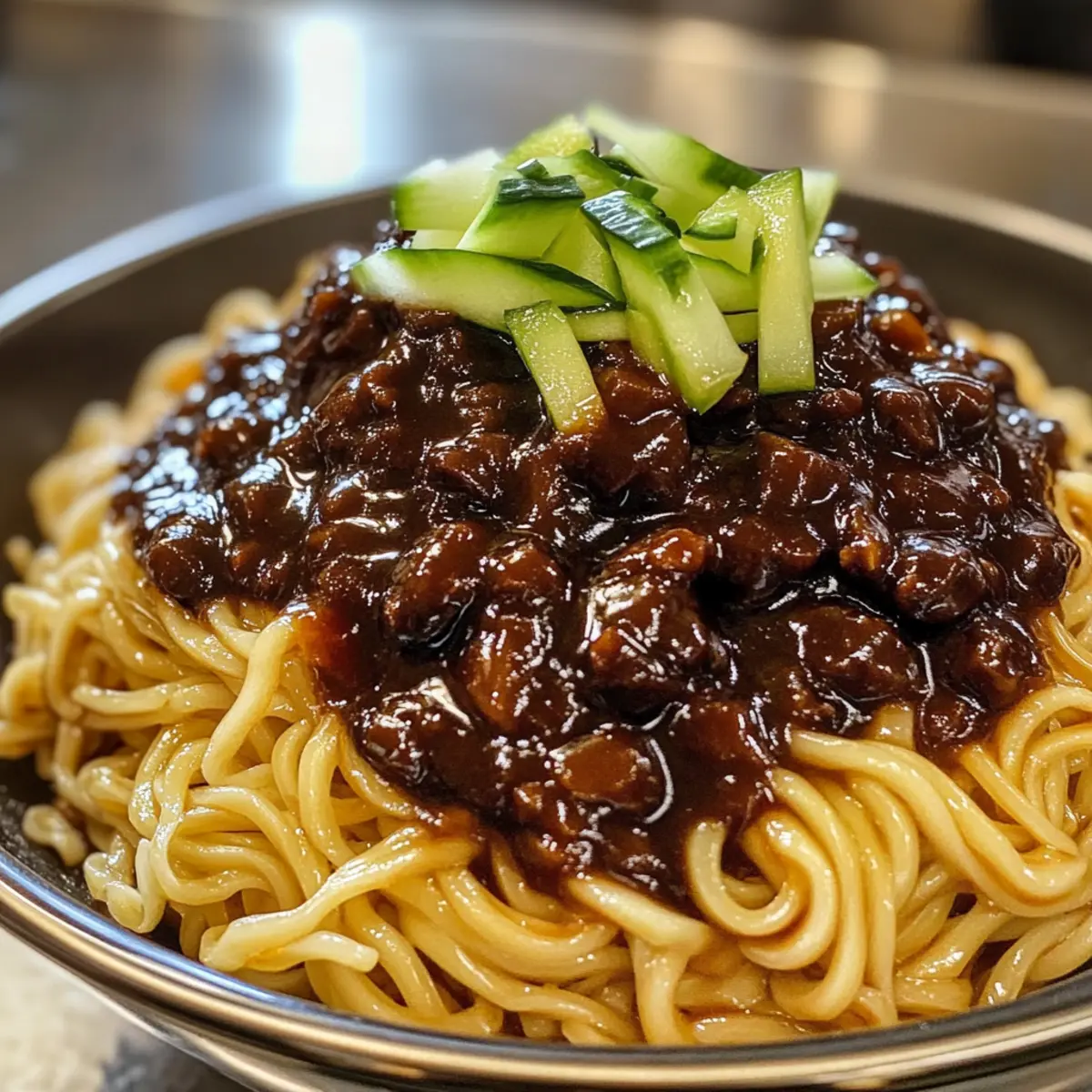
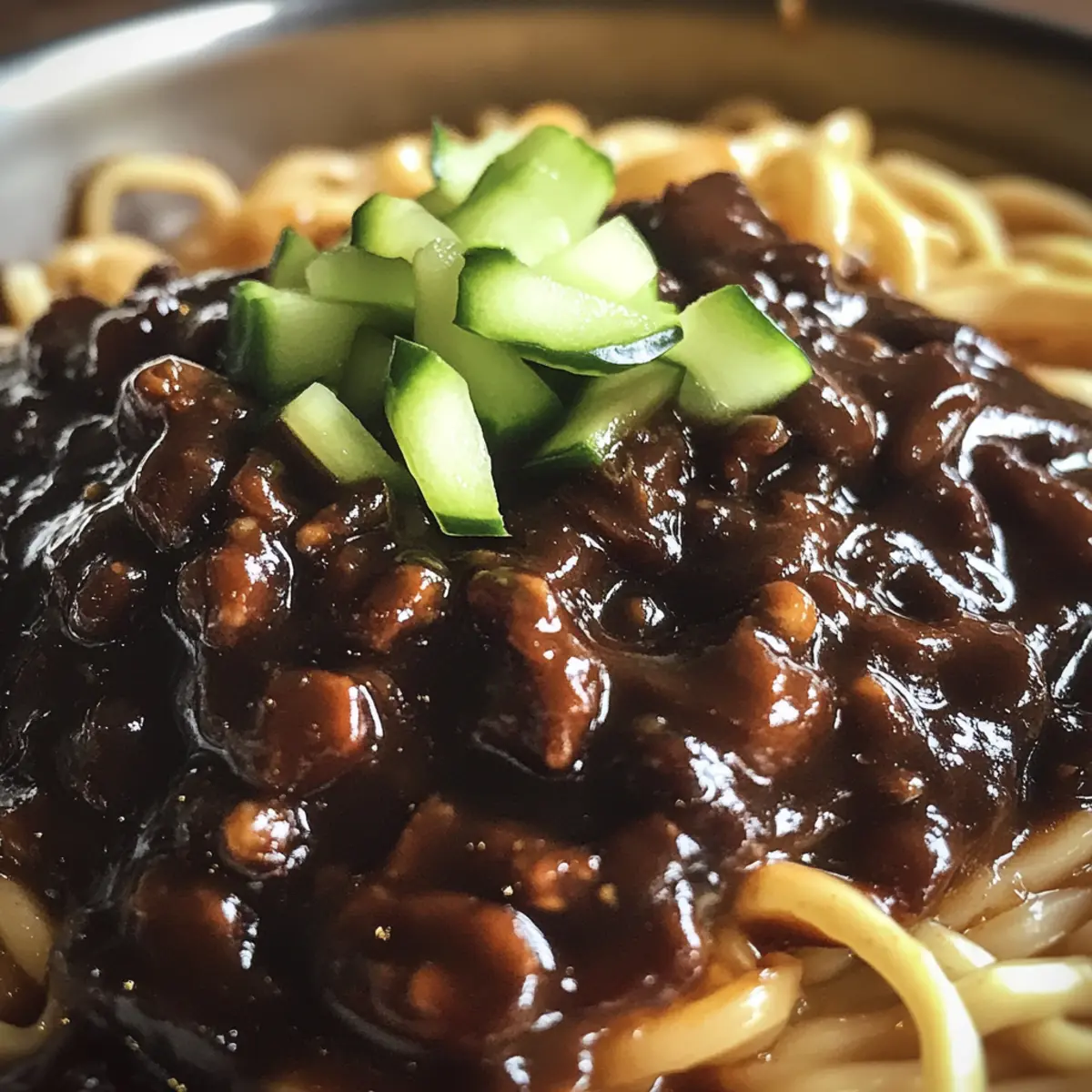
Craving something that wraps you in a comforting embrace with just one bite? Let me introduce you to Jajangmyeon, the ultimate Korean black bean noodles that promise a culinary adventure right at your dinner table. With a rich, thick black bean sauce hugging chewy wheat noodles, this dish is both a crowd-pleaser and an adaptable masterpiece, ready to cater to your dietary preferences—whether you’re a meat lover or a devoted vegetarian. In just 40 minutes, you can whip up this soulful comfort food that not only satisfies your hunger but also sparks joy in your kitchen. Are you ready to dive into a bowl of pure deliciousness, or should I say, an irresistible taste of Korea?
Why is Jajangmyeon a must-try dish?
Rich, Comforting Flavors: The bold and savory black bean sauce envelops each noodle, promising a satisfying bite every time.
Versatile Options: Easily adaptable, you can enjoy this dish as a classic, vegetarian, or even gluten-free.
Quick Preparation: Whip it up in just 40 minutes, making it perfect for a weeknight dinner.
Crowd-Pleasing Delight: This Jajangmyeon recipe is guaranteed to impress, whether serving for family or entertaining guests.
Nutrient-Packed: With fresh vegetables included, it hits the spot in flavor while also providing health benefits. Don’t forget to check out how to cook homemade Pot Pinto Beans for more comforting ideas!
Jajangmyeon Ingredients
For the Sauce
• Vegetable Oil – Provides the necessary fat for sautéing; use canola or sesame oil for a distinct flavor.
• Pork Belly (6 oz, diced) – Adds rich flavor and texture to the sauce; substitute with tofu or mushrooms for vegetarian options.
• Onion (1/2, chopped) – Offers sweetness and depth in flavor; any onion variant can work wonderfully.
• Zucchini (1/2, chopped) – Adds mild flavor and nutrition; can be replaced with bell peppers or carrots for variation.
• Potato (1 small, peeled and diced) – Contributes texture and heartiness to the dish; sweet potatoes make a delightful alternative.
• Garlic (2 cloves, minced) – Enhances savory flavor; fresh garlic is highly recommended for potency.
• Korean Black Bean Paste (Chunjang, 2 tablespoons) – The star of the dish; look for it in Asian markets for authentic flavor.
• Sugar (1 tablespoon) – Balances the saltiness and bitterness of the sauce; honey serves as a great natural substitute.
• Oyster Sauce (1 tablespoon) – Elevates the depth of flavor; a vegetarian version can substitute with mushroom sauce.
• Water (1/2 cup) – Helps create sauce consistency; start with less and add more as needed.
• Cornstarch (1 tsp) + Water (1 tbsp, slurry) – Used to thicken the sauce; arrowroot or flour can substitute with adjusted quantities.
• Salt and Pepper – For final seasoning to taste; don’t be shy to adjust!
For the Noodles
• Fresh Jajangmyeon Noodles (or thick wheat noodles, 2 servings) – These provide the dish’s hearty base; fresh noodles yield the best texture.
For Garnish
• Julienne Cucumber – Adds a refreshing crunch on top; avocado can also give a creamy twist to your dish.
Dive into this delightful plate of Jajangmyeon (Korean black bean noodles) and embrace every comforting flavor it brings!
Step‑by‑Step Instructions for Jajangmyeon (Korean Black Bean Noodles)
Step 1: Heat the Oil
In a large pan, heat 2 tablespoons of vegetable oil over medium-high heat until shimmering. This should take about 2 minutes. The oil is ready when it glistens and a light swirl creates small ripples. Prepare your ingredients nearby, as you’ll need to act quickly.
Step 2: Sauté the Pork Belly
Add 6 ounces of diced pork belly to the heated oil, letting it cook for about 5 minutes. Stir occasionally until the pork turns golden brown and crispy. The sizzling sound will assure you that the pork is rendering its fat and developing rich flavor.
Step 3: Add Vegetables
Stir in ½ chopped onion, ½ chopped zucchini, and 1 small peeled and diced potato into the pan. Sauté for 5 to 7 minutes until the vegetables soften and the onion becomes translucent. Continue stirring to prevent sticking, allowing all the flavors to meld beautifully.
Step 4: Incorporate Garlic
Add 2 minced garlic cloves to the mixture and cook for an additional minute. The garlic will release its aromatic scent, so keep an eye on it to prevent burning. The mixture should smell heavenly at this point, a sign that your Jajangmyeon is taking shape.
Step 5: Mix in Black Bean Paste
Stir in 2 tablespoons of Korean black bean paste (Chunjang) and 1 tablespoon of sugar. Mix well for about 2 minutes until everything is evenly coated. The paste should blacken the mixture, intensifying its color and flavor, creating that characteristic savory base for your Jajangmyeon.
Step 6: Add Sauces and Water
Pour in 1 tablespoon of oyster sauce and ½ cup of water, then bring to a simmer. Cover the pan and let it cook for 8 to 10 minutes. This step allows the vegetables to fork-tender while the flavors deepen, creating a luscious sauce that will cling beautifully to your noodles.
Step 7: Thicken the Sauce
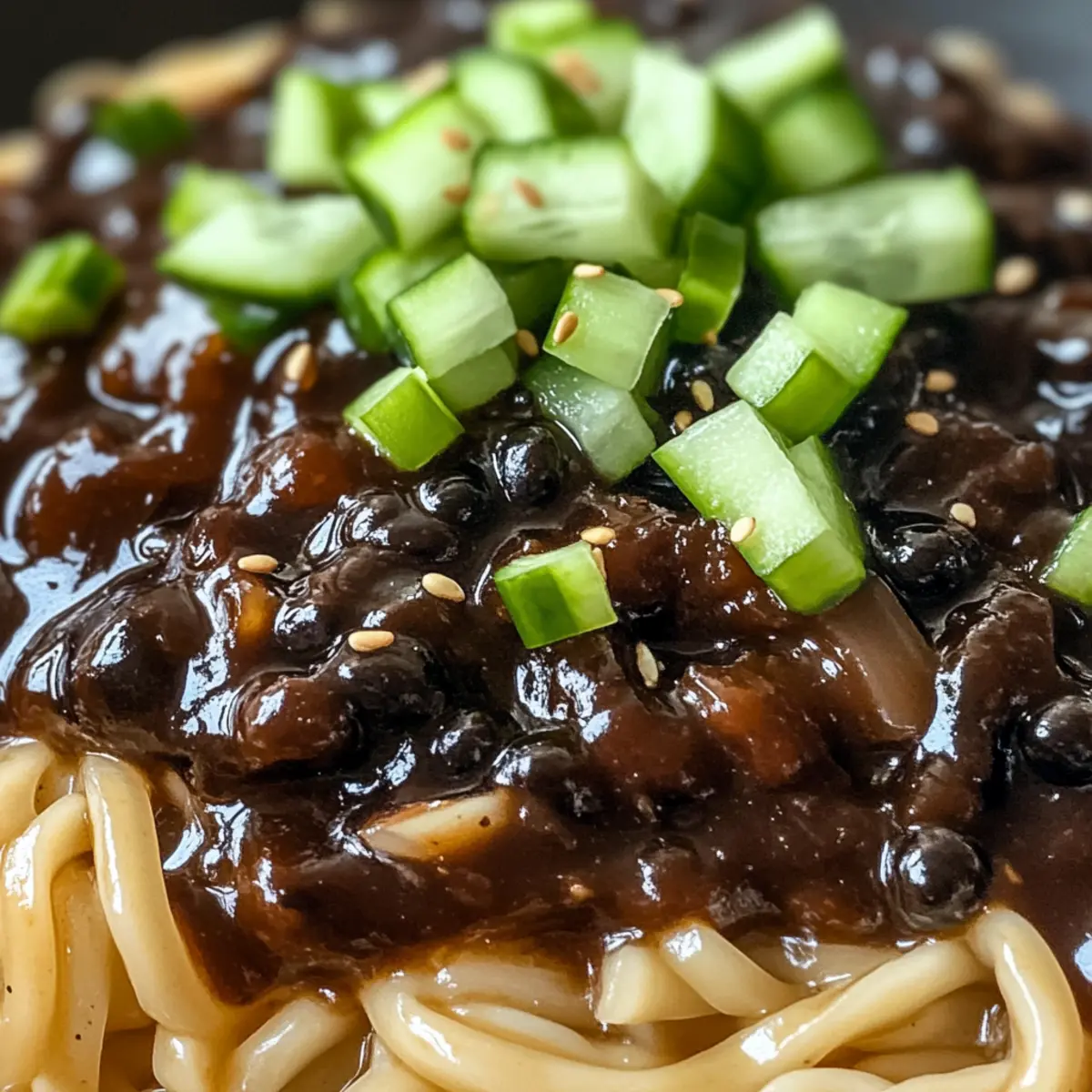
After the simmering time, stir in a slurry made from 1 teaspoon of cornstarch mixed with 1 tablespoon of water. Cook for an additional 2 minutes until the sauce thickens to a glossy consistency. This is the moment you’ll watch the sauce transform into a rich coating, perfect for your noodles.
Step 8: Cook the Noodles
While the sauce thickens, prepare the noodles according to package instructions, typically boiling for 4-5 minutes until they are chewy yet tender. Once cooked, drain and rinse them briefly under cold water to remove excess starch, ensuring they don’t stick together.
Step 9: Serve with Sauce and Garnish
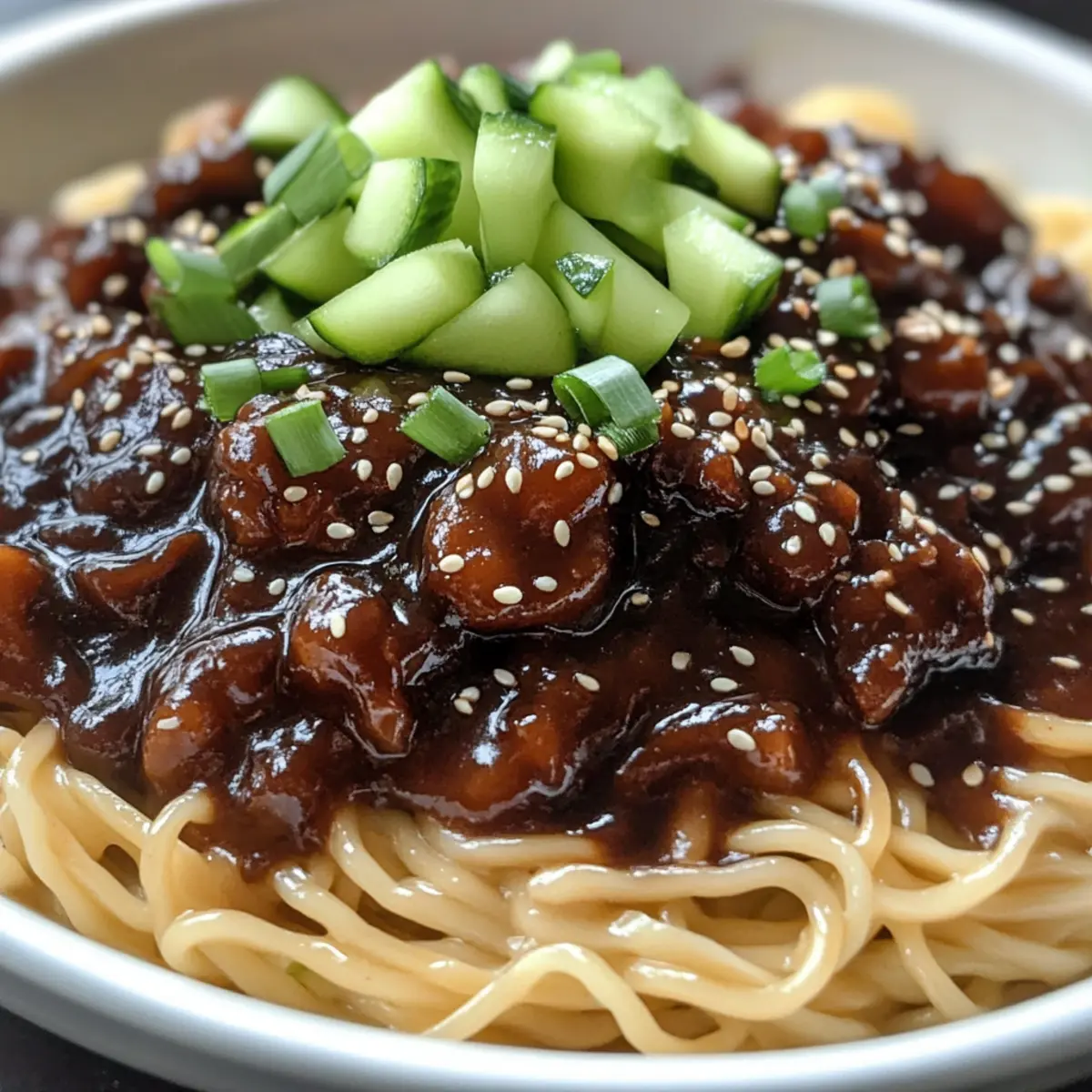
In serving bowls, place a generous portion of noodles and ladle the thick black bean sauce over the top. Be sure to include chunks of the sautéed vegetables and pork for a hearty bite. For a refreshing finish, garnish with julienned cucumber, adding a delightful crunch that contrasts the dish’s rich flavors.
Make Ahead Options
These Jajangmyeon (Korean black bean noodles) are perfect for busy home cooks looking to streamline meal prep! You can prepare the black bean sauce up to 3 days in advance, refrigerating it in an airtight container to keep the flavors fresh. Simply sauté the pork belly and vegetables, mix in the black bean paste, and let it simmer as usual. Store the fresh noodles separately to maintain their texture. When you’re ready to serve, reheat the sauce on the stovetop and cook the noodles according to package instructions for a quick finish. This method ensures you enjoy a satisfying homemade meal with minimal effort, just as delicious as when freshly made!
What to Serve with Classic Jajangmyeon?
To create an inviting, complete meal, consider pairing your comforting bowl of Jajangmyeon with these delicious accompaniments.
-
Pickled Radish (Danmuji):
The tangy crunch of pickled radish enhances the rich flavors of Jajangmyeon, cutting through its thickness. It adds a refreshing contrast that balances the dish beautifully. -
Korean Fried Dumplings (Gunmandu):
These crispy delights are perfect for sharing and add a delightful textural contrast. Filled with savory goodness, they complement the noodles’ softness and create a perfect bite. -
Scallion Pancakes (Pajeon):
A favorite side dish, these chewy pancakes filled with green onions offer a savory flavor that harmonizes with Jajangmyeon. They also provide an extra crunch suitable for all ages. -
Garlic Soybean Sprouts:
These lightly seasoned sprouts bring a satisfying crunch and a hint of nuttiness, refreshing the palate between rich bites. Plus, they are packed with vitamins! -
Cucumber Salad:
A light cucumber salad dressed in sesame oil offers a refreshing bite to contrast the richness of the black bean sauce. It’s wonderfully satisfying and a delightful addition to your meal. -
Sweet Rice Drink (Sikhye):
This traditional Korean drink is sweet and refreshing, providing a perfect finish to your Jajangmyeon meal. It’s light yet satisfying and can cleanse your palate after the savory bite.
Indulging in these delightful pairings will elevate your Jajangmyeon experience, ensuring a satisfyingly complete meal!
Jajangmyeon Variations & Substitutions
Feel free to let your creativity flow and customize your Jajangmyeon for an exciting twist on this classic dish!
- Vegetarian/Vegan: Substitute pork with tofu and use vegetable broth instead of oyster sauce for a plant-based delight. This transformation keeps the heartiness while making it suitable for all eaters.
- Seafood Version: Incorporate shrimp or squid to give a delightful seafood twist. Their flavors blend beautifully with the black bean sauce, creating an oceanic delight on your plate.
- Gluten-Free: Swap traditional wheat noodles for rice noodles or any gluten-free option. This alternative allows everyone to enjoy the dish while catering to different dietary needs.
- Cheesy Jajangmyeon: Melt some cheese into the sauce for a creamy, gooey experience—perfect for cheese lovers! Imagine a fusion delight that kids and adults alike will adore.
- Extra Vegetables: Boost nutrition and add color by incorporating bell peppers, carrots, or snap peas. These crunchy additions elevate both the flavor and visual appeal, making each bite fun.
- Spicy Kick: Add a tablespoon of gochujang (Korean chili paste) for an added heat dimension. It transforms the dish into a fiery blessing, ideal for spice enthusiasts!
- Sweet Potato Twist: Replace regular potatoes with sweet potatoes for a sweeter, nutrient-packed alternative. The natural sweetness complements the savory sauce beautifully.
- Savory Mushroom: For a deeper umami flavor, add sliced shiitake or portobello mushrooms. They give a fantastic texture and a richer taste, making every spoonful indulgent.
As you can see, Jajangmyeon is incredibly versatile—perfect for any mood or dietary preference! If you’re looking for more comforting recipes, check out my easy, delicious Pot Pinto Beans. Enjoy your culinary adventure!
Expert Tips for Jajangmyeon
-
Noodle Quality: Use fresh Jajangmyeon noodles for an authentic experience; they provide the best texture and absorb the sauce splendidly.
-
Sautéing Chunjang: Always sauté Korean black bean paste before adding water to unlock its full flavor potential. Avoid adding it directly to the liquid.
-
Taste as You Go: Adjust sugar and oyster sauce levels during cooking to ensure a balanced flavor. Everyone’s palate is different!
-
Add More Vegetables: Don’t be afraid to pile on the veggies! Bell peppers and carrots can elevate your Jajangmyeon while ensuring it’s nutrient-packed and colorful.
-
Store Leftovers Wisely: Keep any leftovers in an airtight container in the fridge; reheat gently with a splash of water to revive that luscious sauce.
-
Garnishing Tips: For extra freshness, add thinly sliced cucumbers or even pickled radish on top to complement your dish’s richness beautifully.
How to Store and Freeze Jajangmyeon
Fridge: Store leftovers in an airtight container in the fridge for up to 3 days. Make sure the dish is completely cooled before sealing to prevent condensation.
Freezer: For longer storage, freeze the sauce in a separate airtight container for up to 2 months. Cooked noodles can also be stored in the freezer but may become slightly mushy when thawed.
Reheating: When ready to enjoy, thaw the frozen sauce overnight in the fridge. Reheat on the stovetop with a splash of water to revive the rich flavors of your Jajangmyeon.
Serving Reminder: Always serve with garnishes like fresh cucumber or pickled radish for an extra burst of flavor and texture!
Jajangmyeon (Korean Black Bean Noodles) Recipe FAQs
What type of noodles should I use for Jajangmyeon?
Absolutely! For the best texture, fresh Jajangmyeon noodles are highly recommended. They have the perfect chewiness and beautifully absorb the rich black bean sauce. If you can’t find Jajangmyeon noodles, thick wheat noodles will work as a great substitute.
How long can I store leftover Jajangmyeon?
You can store leftovers in an airtight container in the fridge for up to 3 days. Make sure the dish has cooled completely before sealing to prevent any condensation, which could make the noodles soggy. When ready to eat, just reheat on the stovetop with a splash of water to restore the sauce’s consistency.
Can I freeze Jajangmyeon?
Certainly! To freeze Jajangmyeon safely, separate the sauce from the noodles. Place the sauce in an airtight container and it can be frozen for up to 2 months. Cooked noodles can also be frozen but might lose their texture slightly upon thawing. When ready to enjoy, thaw the sauce overnight in the fridge and reheat gently on the stovetop.
What should I do if my Jajangmyeon sauce is too thick?
If your black bean sauce turns out thicker than desired, fear not! Simply add a bit of warm water—start with 1 tablespoon—and stir it in gradually until you reach your desired consistency. Remember, it’s all about balance, and adjusting water is a great way to achieve it!
Are Jajangmyeon suitable for dietary restrictions?
Very! This dish is incredibly versatile. For a vegetarian or vegan version, replace the pork with tofu and use vegetable broth in place of the oyster sauce. If you’re gluten-free, you can enjoy it by swapping the traditional noodles for rice noodles. Don’t hesitate to tailor it to your dietary needs!
What are some great garnishes for Jajangmyeon?
For a fresh crunch, I highly recommend julienned cucumber as a garnish. It adds a delightful contrast to the richness of the sauce. You can also try slices of avocado for creaminess or serve alongside pickled radish for an added tang. The more, the merrier!
Ultimate Jajangmyeon: Comforting Korean Black Bean Noodles
Ingredients
Equipment
Method
- Heat the oil: In a large pan, heat 2 tablespoons of vegetable oil over medium-high heat until shimmering. This should take about 2 minutes.
- Sauté the pork belly: Add 6 ounces of diced pork belly to the heated oil, cooking for about 5 minutes until golden brown and crispy.
- Add vegetables: Stir in ½ chopped onion, ½ chopped zucchini, and 1 small peeled and diced potato. Sauté for 5 to 7 minutes until softened.
- Incorporate garlic: Add 2 minced garlic cloves and cook for an additional minute until fragrant.
- Mix in black bean paste: Stir in 2 tablespoons of Korean black bean paste (Chunjang) and 1 tablespoon of sugar. Mix well for about 2 minutes.
- Add sauces and water: Pour in 1 tablespoon of oyster sauce and ½ cup of water, bring to a simmer, and cover. Cook for 8 to 10 minutes.
- Thicken the sauce: Stir in a slurry made from 1 teaspoon of cornstarch mixed with 1 tablespoon of water and cook for an additional 2 minutes.
- Cook the noodles: Prepare the noodles according to package instructions, typically boiling for 4-5 minutes. Drain and rinse briefly.
- Serve with sauce and garnish: In serving bowls, place noodles and ladle the thick black bean sauce over the top. Garnish with julienned cucumber.