
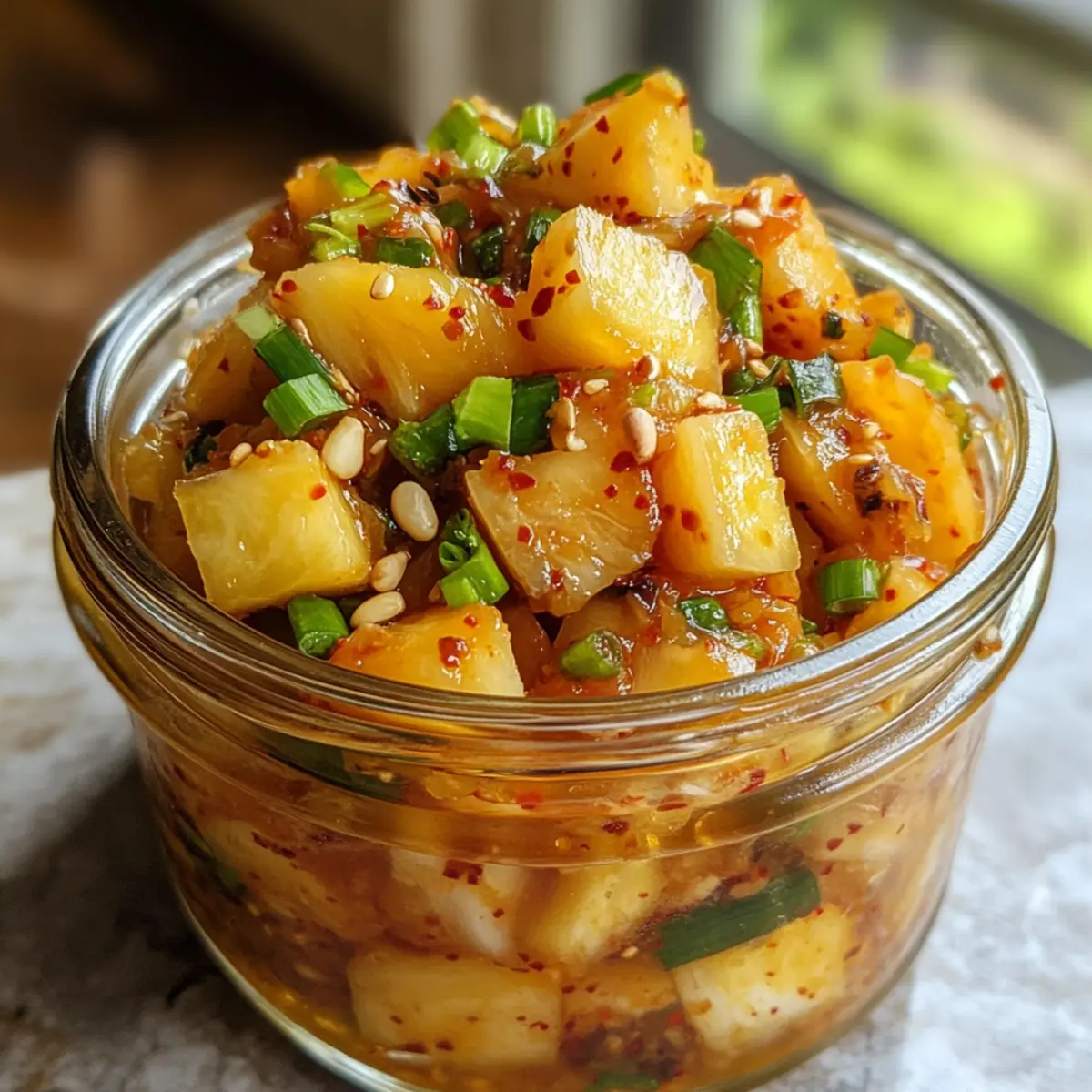
As I stood in the kitchen, the sweet aroma of freshly sliced pineapple filled the air, transporting me to sun-drenched shores. That’s when I decided to whip up a batch of Fermented Pineapple Kimchi, a vibrant dish that harmonizes the tropical sweetness of pineapple with the zesty heat of ginger and Korean gochugaru. In just 15 minutes of prep time, you can create this exciting fusion that’s not only quick to make but also a fantastic way to elevate your meals with a unique twist. Enjoy it as a spicy side dish, a lively topping for tacos, or a flavor-packed addition to salads. Curious about how this delightful and refreshing kimchi can transform your culinary adventures? Let’s dive into the recipe!
What’s Special About Fermented Pineapple Kimchi?
Unique Twist: This recipe brings a sweet and spicy surprise to traditional kimchi, making it a delightful discovery for your taste buds.
Easy Preparation: With just 15 minutes of prep time, you can create a dish that’s both flavorful and quick, perfect for busy weeknights.
Versatile Flavor: Serve it as a refreshing side, use it as a topping for grilled meats, or toss it in your salads for an extra zing.
Low-Calorie Delight: At only 13 kcal per serving, this kimchi is light yet packed with vibrant flavors, ensuring you don’t skimp on enjoyment while staying health-conscious.
Customize Your Heat: Adjust the spice level with gochugaru to suit your taste, or explore exciting variations, such as substituting mango for pineapple! This recipe will leave you craving more, just like our delightful Pineapple Heaven Cheesecake or the zingy Pineapple Cowboy Candy.
Fermented Pineapple Kimchi Ingredients
• Discover the essential ingredients that bring this vibrant dish to life!
For the Kimchi
- Fresh Pineapple – Adds natural sweetness and is the star ingredient; canned pineapple in juice can be used for a quicker option.
- Garlic Cloves – Provide depth of flavor and aroma; adjust the amount for a milder taste.
- Green Onions – Contribute a fresh, mild onion flavor; chives can be substituted for a gentler taste.
- Fish Sauce – Brings umami and saltiness; swap with soy sauce or miso paste for a vegetarian alternative.
- Gochugaru (Korean Red Pepper Flakes) – Adds spice and vibrant color; adjust the amount to control the heat level.
- Ginger – Offers zesty warmth that complements the pineapple; ground ginger can be used in a pinch but may alter the freshness.
- Salt – Essential for fermentation, at 2% of the total weight of pineapple and water; ensure a proper balance for successful fermentation.
For the Brine
- Water – Used to cover the mixture; filtered water is best for clear results.
- Salt – Essential for the brine, helps in effective fermentation; follow the 2% rule for optimal results.
Enjoy crafting this Fermented Pineapple Kimchi, a refreshing and lively addition to any meal!
Step‑by‑Step Instructions for Fermented Pineapple Kimchi
Step 1: Prep Pineapple
Begin by peeling and slicing the fresh pineapple into 1 cm thick rounds, ensuring they’re uniform for even fermentation. Use a sharp knife to get clean cuts; the vibrant yellow should reflect the sun as you work. Once prepped, set aside the slices on a clean cutting board to infuse your kitchen with that irresistible tropical aroma.
Step 2: Prepare Ingredients
Thinly slice the garlic cloves and chop the green onions into bite-sized pieces. Grate the ginger finely to release its zesty oils. Gather all these ingredients in a large mixing bowl, ready to combine. The beautiful medley of colors and textures will tantalize your senses, promising a flavorful journey with your Fermented Pineapple Kimchi.
Step 3: Mix Ingredients
In the large bowl, combine the sliced pineapple, garlic, green onions, grated ginger, fish sauce, and gochugaru. Toss the mixture gently with your hands or a spoon until every piece is well-coated with the vibrant spices and seasonings. The blend should be fragrant and colorful, with the pineapple shimmering under the mix—this is where the magic begins!
Step 4: Pack for Fermentation
Transfer the delicious mixture into clean fermentation jars, ensuring to pack it tightly without crushing the pineapple or other ingredients. Press down gently to remove air bubbles; the mixture should be snug but still visible. Leave some space at the top of each jar for expansion as it ferments—this is vital for your Fermented Pineapple Kimchi to thrive.
Step 5: Add Brine
Next, fill the jars with clean, filtered water until all the ingredients are completely submerged. Add salt, ensuring it’s 2% of the total weight of the mixture—this key step creates the ideal environment for fermentation. Stir the mixture gently in the jar to dissolve the salt, then observe as the vibrant ingredients begin to dance in their briny bath.
Step 6: Submerge and Seal
Ensure all ingredients are completely submerged under the water by using weights if necessary. This step helps prevent spoilage and promotes even fermentation. Close the lids loosely to allow gases to escape; you don’t want an explosion! The anticipation builds as you prepare for the magic of fermentation to unfold with your Fermented Pineapple Kimchi.
Step 7: Ferment
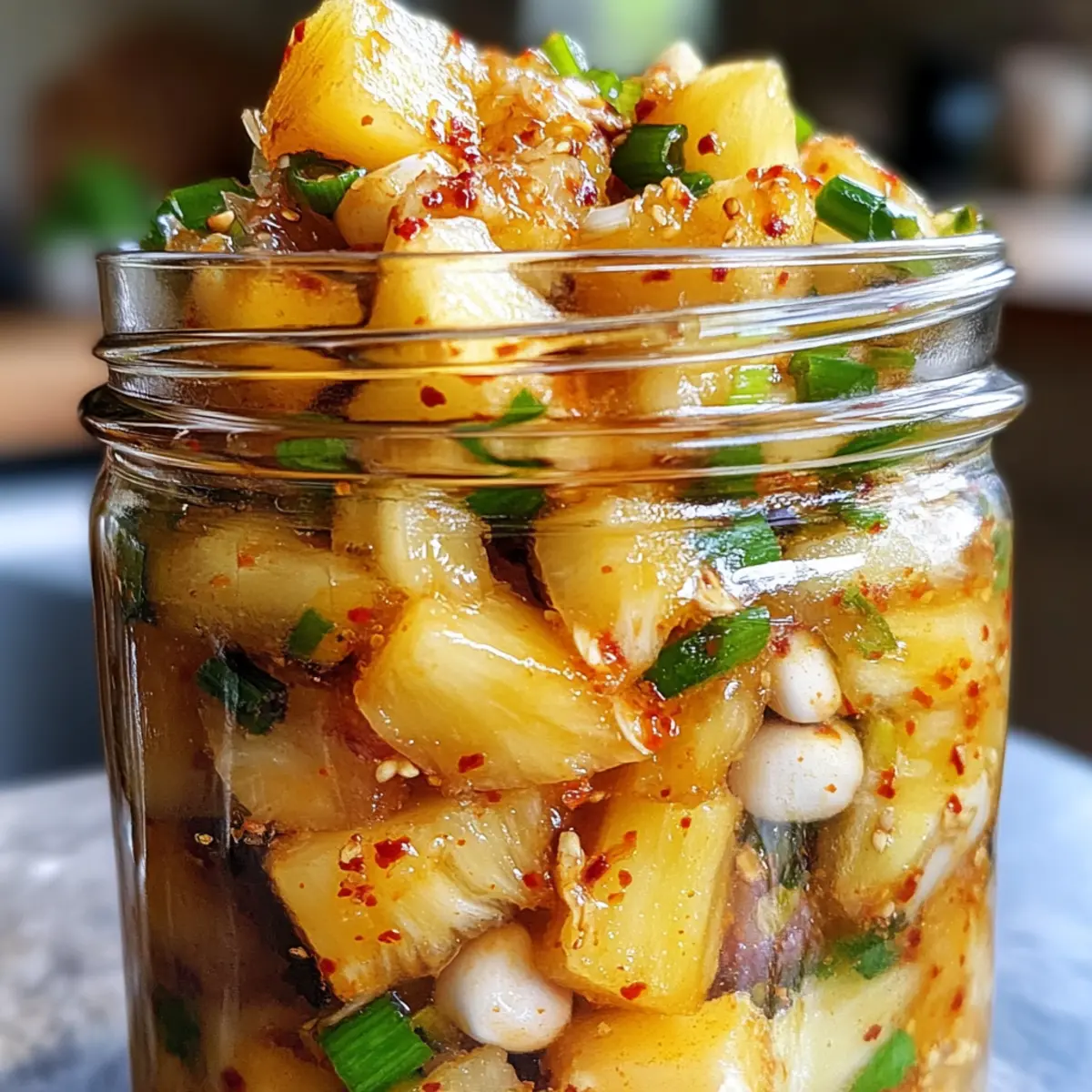
Place the jars in a warm, dark place, ideally between 68°F and 75°F, for 8-10 days. During this time, keep an eye on them by checking periodically. You’ll notice bubbles forming and a delightful tang developing. This step is crucial in allowing flavors to meld and bring a delightful zest to your Fermented Pineapple Kimchi.
Step 8: Store
Once the fermentation period is complete and your kimchi has the desired tang, carefully transfer the jars to the refrigerator to slow down the fermentation process. The cool environment will preserve the vibrant flavors you’ve created. Enjoy the burst of tropical taste over the next few weeks, and share the joy of your homemade Fermented Pineapple Kimchi with family and friends!
Expert Tips for Fermented Pineapple Kimchi
-
Use Clean Equipment: Always ensure that your jars and utensils are properly sanitized to prevent spoilage during fermentation.
-
Check for Gases: Open the jars periodically to release built-up gases, which can cause pressure and affect the fermentation process.
-
Mind the Heat: Adjust the amount of gochugaru according to your desired spice level; start with a little and add more as needed for your ideal Fermented Pineapple Kimchi.
-
Remove Mold Promptly: If you spot any mold on the surface during fermentation, carefully remove it to avoid affecting the rest of your batch.
-
Taste Test: Don’t hesitate to taste your kimchi before storing; it can be enjoyed fresh or allowed to ferment longer for a more intense flavor.
-
Storage Tip: For the best flavor, consume your Fermented Pineapple Kimchi within a month, as its taste will continue to evolve over time in the fridge.
Make Ahead Options
These Fermented Pineapple Kimchi preparations are perfect for busy home cooks looking to save time during the week! You can prep the pineapple and other ingredients up to 24 hours in advance. Simply slice the pineapple, garlic, green onions, and ginger and store them in airtight containers in the refrigerator to maintain freshness. When you’re ready to make your kimchi, combine the prepped ingredients with fish sauce and gochugaru, then pack them into jars for fermentation as usual. Keeping your ingredients chilled helps preserve their vibrant flavors, ensuring that your Fermented Pineapple Kimchi will be just as delicious when served! Enjoy this flavorful dish as a delightful side, and you’ll appreciate the time saved during the busy week.
How to Store and Freeze Fermented Pineapple Kimchi
Fridge: Store your Fermented Pineapple Kimchi in an airtight container in the refrigerator for up to 4 weeks. The flavors continue to develop beautifully during this time.
Freezer: For longer storage, you can freeze the kimchi for up to 6 months. Use freezer-safe bags or containers, leaving some space for expansion.
Thawing: When ready to use, thaw in the fridge overnight. Enjoy it cold or heat gently in a pan, but avoid boiling to preserve flavor.
Serving Tip: The kimchi can be enjoyed straight from the fridge, as a topping, or alongside grilled dishes, bringing a burst of tropical flavor to your meals!
Fermented Pineapple Kimchi: Endless Possibilities
Feel empowered to make this delightful dish your own with a few simple tweaks and substitutions!
-
Fruit Swap: Try substituting fresh pineapple with mango or papaya for a sweet twist; their tropical flavors will shine through.
-
Spicy Kick: Need more heat? Increase the amount of gochugaru or add fresh jalapeños for a fiery surge that’ll tantalize your taste buds!
-
Vegetarian Twist: Replace fish sauce with soy sauce or miso paste to cater to your vegetarian friends—it’ll still be bursting with umami!
-
Herb Infusion: For added freshness, toss in some cilantro or basil right before serving—this aromatic touch will elevate the flavors beautifully.
-
Texture Variation: Change up the crunch by adding in some shredded carrots or cabbage; these can provide a delightful textural contrast to the pineapple.
-
Zesty Lime: For a bright zing, squeeze in some fresh lime juice just before enjoying—it will enhance the pineapple’s natural sweetness!
-
Pickled Delights: Consider adding pickled radishes or carrots for an extra layer of tang; they beautifully complement the kimchi and create a vibrant palette.
-
Experiment with Accompaniments: Use this Fermented Pineapple Kimchi as a topping for sandwiches or burgers, or jazz up your tacos with its exciting flavors! It’s a versatile flair that pairs wonderfully with dishes like our Pineapple Heaven Cheesecake or our zesty Pineapple Cowboy Candy.
Dive into this delightful journey and create a version of Fermented Pineapple Kimchi that speaks to your culinary heart!
What to Serve with Fermented Pineapple Kimchi
Elevate your meal with delightful pairings that complement the exotic flavors of this vibrant dish.
-
Grilled Chicken Skewers: The smoky flavor of grilled chicken contrasts beautifully with the sweet and tangy kimchi, creating a balanced dining experience.
-
Stir-Fried Vegetables: A medley of colorful veggies sautéed in sesame oil adds crunch and freshness, making every bite a celebration of texture and taste.
-
Rice Bowls: Serve the kimchi over a bowl of fluffy jasmine rice for a satisfying meal that brings the sweetness of the kimchi to the forefront.
-
Fish Tacos: The zesty kimchi acts as a vibrant topping that enhances the savory elements of grilled fish, giving an exciting twist to classic tacos.
-
Asian Slaw: Pair the kimchi with a simple Asian-style slaw for an uplifting crunch; the freshness of the slaw enhances the kimchi’s unique flavors.
-
Cold Noodle Salad: Tossed with sesame dressing, adding chilled noodles creates a refreshing dish that harmonizes well with the kimchi’s heat and sweetness.
-
Refreshing Drinks: Pair with a light, fruity beverage like coconut water or a citrus-infused iced tea to cleanse your palate and complement the dish’s tropical notes.
-
Lemon Sorbet: For dessert, end your meal with a tangy lemon sorbet; this refreshing treat neatly balances the spiciness of the kimchi for a delightful finish.
Fermented Pineapple Kimchi Recipe FAQs
What type of pineapple should I use?
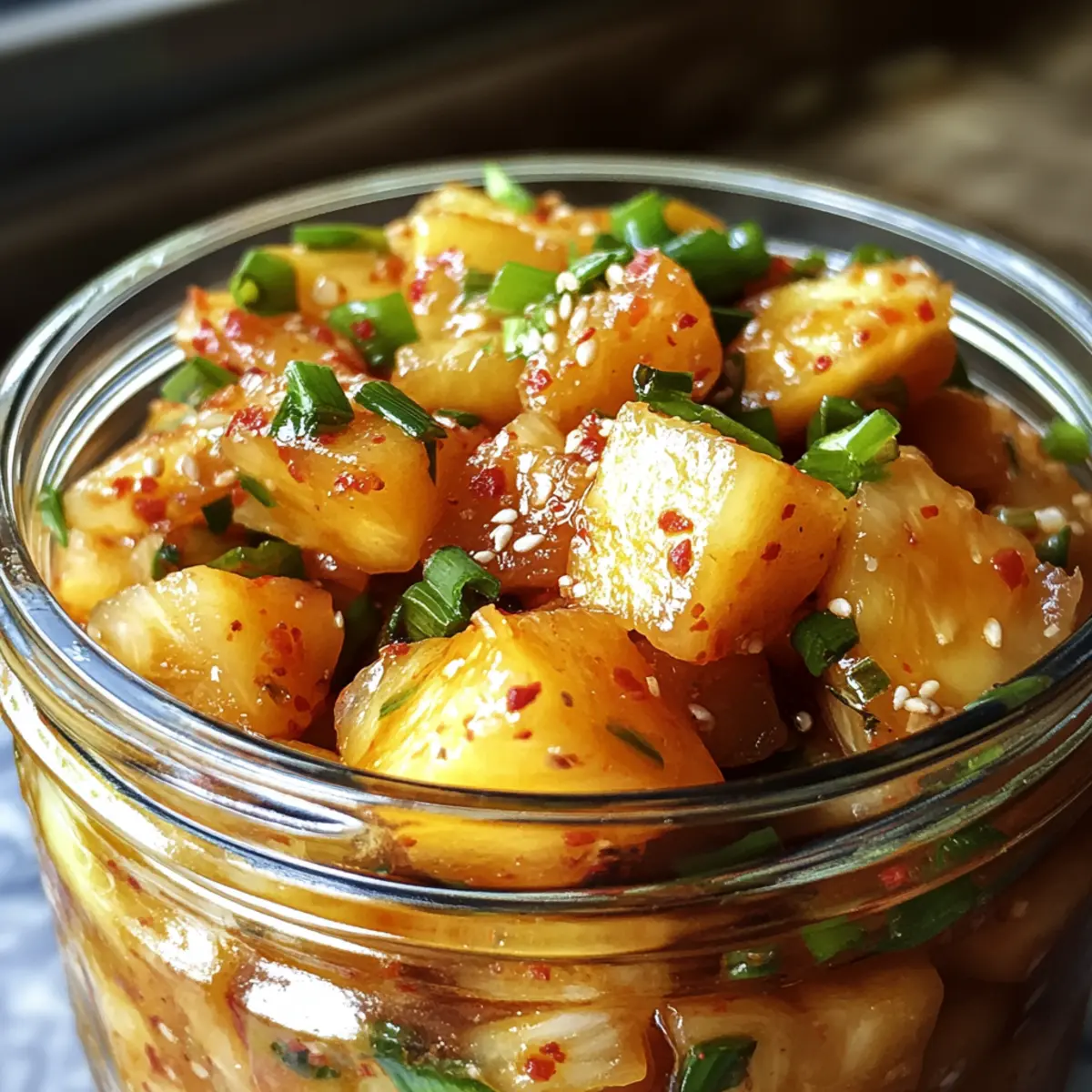
Absolutely! Fresh pineapple is best as it adds natural sweetness and a firm texture. When selecting a pineapple, look for one that’s slightly soft to the touch and has a sweet fragrance. Avoid those with dark spots all over, as they can indicate overripeness. If you’re short on time, canned pineapple packed in juice is a quick alternative.
How should I store my Fermented Pineapple Kimchi?
Very! Store your Fermented Pineapple Kimchi in an airtight container in the refrigerator. It will stay fresh for up to 4 weeks. You’ll find that the flavors will continue to evolve, creating delightful complexities the longer it sits. Just remember to enjoy it within a month for optimal taste.
Can I freeze my Fermented Pineapple Kimchi?
Absolutely! For longer storage, you can freeze your kimchi for up to 6 months. Use freezer-safe bags or containers and leave some space for expansion. When you’re ready to enjoy it, simply thaw in the fridge overnight. You can serve it cold as a refreshing side or heat it gently in a pan—just avoid boiling to keep all the wonderful flavors intact.
What if my kimchi develops mold during fermentation?
Not to worry! If you spot any mold on the surface during fermentation, carefully remove the affected areas right away to avoid affecting the rest of your batch. Make sure all your equipment is properly sanitized before you start to reduce this risk. Keep an eye on your kimchi; it’s important to check periodically, both for taste and to ensure everything is fermenting as it should.
Is this recipe safe for those with dietary restrictions, like allergies?
Good question! This Fermented Pineapple Kimchi is naturally gluten-free and vegetarian-friendly when you substitute fish sauce with soy sauce or miso paste. Always check the labels of any substitutions you make to ensure they meet your dietary needs, especially for allergies. If you have pets, keep the kimchi out of their reach since some ingredients like garlic can be harmful to them.
How long does the fermentation process take?
Very! The fermentation process typically takes about 8 to 10 days, depending on your environment’s temperature. Place your jars in a warm, dark place (ideally between 68°F and 75°F) and remember to check on them every few days. You’ll notice bubbles forming, which are a sign of healthy fermentation, and you can taste it along the way to see if it’s reached your preferred tanginess!
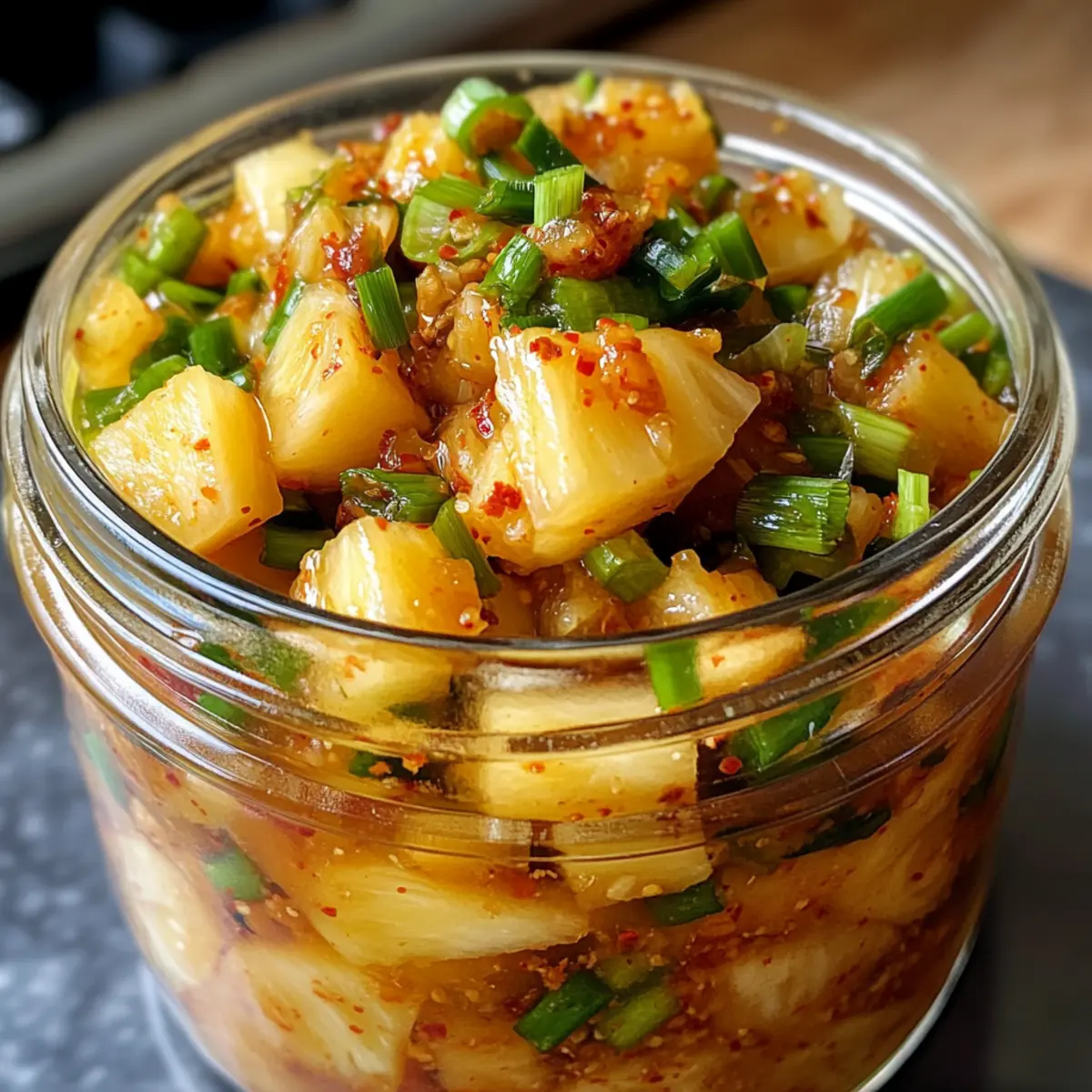
Fermented Pineapple Kimchi: A Sweet & Spicy Twist!
Ingredients
Equipment
Method
- Begin by peeling and slicing the fresh pineapple into 1 cm thick rounds, ensuring they’re uniform for even fermentation.
- Thinly slice the garlic cloves and chop the green onions into bite-sized pieces. Grate the ginger finely.
- Combine the sliced pineapple, garlic, green onions, grated ginger, fish sauce, and gochugaru in a large bowl. Toss gently until well-coated.
- Transfer the mixture into clean fermentation jars, packing it tightly without crushing the ingredients.
- Fill the jars with clean, filtered water until all ingredients are submerged. Add salt, ensuring it’s 2% of the total weight.
- Ensure all ingredients are submerged under water, then close the lids loosely to allow gases to escape.
- Place the jars in a warm, dark place (68°F-75°F) for 8-10 days, checking periodically for bubbles.
- Once fermentation is complete, transfer the jars to the refrigerator to slow down the fermentation process.